Fresh Sushi at Midnight: Inside the Operating System Behind Japan's 24-Hour Trust Machines
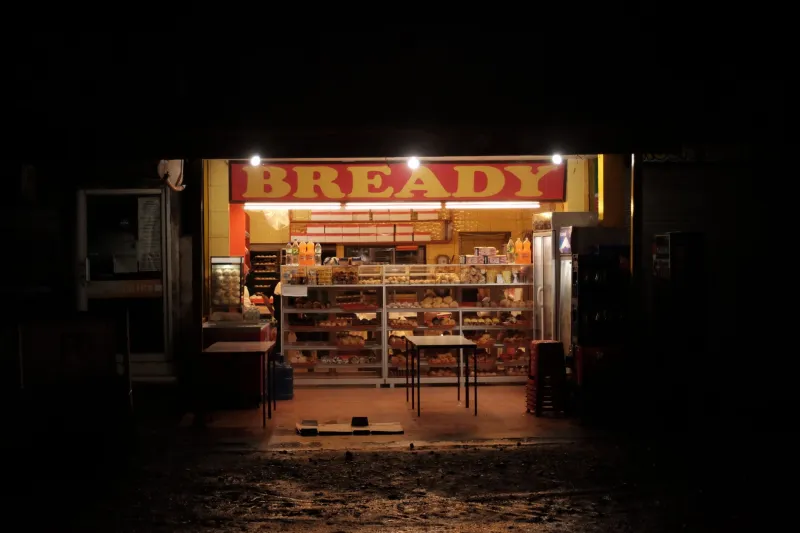
Walk into a 7-Eleven in Tokyo at 2 a.m. and you can buy a reasonably fresh bento, pay a utility bill, ship a package, withdraw cash, and pick up a reserved concert ticket—all in a spotless, well-lit space where you feel entirely safe. Walk into many American convenience stores after dark and the experience is often the inverse: locked cases, faded hot dogs on rollers, and a cashier behind bulletproof glass.
The gap is not an accident of culture alone. It is the product of a deliberate operating system—one that American retailers, franchise operators, and even city planners could borrow from, piece by piece.
The Freshness Supply Chain Nobody Talks About
The heart of the konbini model is logistics. Japan's major chains deliver fresh food to individual stores three times a day, on a schedule so precise that delivery drivers can back a truck to a store's loading dock within a window of minutes. Inventory is tracked against weather forecasts, local events, and even school calendars, and unsold prepared food is pulled from shelves well before quality degrades.
Contrast this with the typical American c-store supply chain, where deliveries may arrive once or twice a week and fresh food is a category rather than a commitment. The result is a self-fulfilling prophecy: because consumers don't trust c-store food, stores don't invest in it, which deepens the distrust. Japanese operators broke that loop by making freshness a logistical guarantee, not a marketing claim.
The economics work because volume is concentrated. Japan has roughly 55,000 convenience stores serving a population of 125 million, and the average customer visits several times a week. Frequency, not basket size, drives the model.
More Than a Store: The Neighborhood's Front Desk
What elevates the konbini beyond a food retailer is its role as civic infrastructure. Japanese convenience stores handle bill payments for utilities and taxes, accept government paperwork, serve as pickup points for online orders and parcels, and in many areas provide free restrooms and seating that function as de facto public space.
For American retailers, this is a strategic insight hiding in plain sight. The corner store that solves five daily problems becomes a habit rather than a destination. Chains like Casey's in the Midwest or Wawa on the East Coast have glimpsed this—Wawa's hoagie loyalty borders on the devotional—but the sector as a whole still treats services as an afterthought rather than a trust-building engine.
There is also a public-policy dimension. As American cities wrestle with food deserts and the decline of brick-and-mortar banking, a network of small, high-frequency retail hubs that host basic financial and government services is an appealing model. Several US cities have experimented with city services in libraries and post offices; the konbini suggests a commercially sustainable version.
Labor, Franchising, and the Model's Honest Flaws
A fair assessment requires candor. Japan's konbini system is under strain. Franchise owners—often independent operators who bear the risk of a 24-hour mandate—have pushed back against round-the-clock hours, and chronic labor shortages have forced chains to trial shorter opening times and greater automation.
These tensions are instructive for American readers precisely because they map onto familiar debates about franchise economics and the true cost of the 'always open' promise. The lesson is not to copy the model wholesale but to understand which parts generate value: the logistics cadence, the freshness discipline, the service integration. The 3 a.m. shift is negotiable. The supply chain is not.
What US Operators Can Realistically Borrow
Three elements are transferable today:
- Delivery frequency over store size. More frequent, smaller deliveries of fresh food—enabled by regional micro-distribution centers—can transform perceived quality without rebuilding real estate.
- Service stacking. Bill pay, package pickup, and ticketing cost little to add and drive visit frequency. Every additional reason to enter the store compounds loyalty.
- Standards enforcement. Japanese chains audit franchises relentlessly on cleanliness and freshness, and underperforming stores are retrained or closed. American franchisors often police brand imagery but not the customer-experience fundamentals that build trust.
The convenience store may be the most under-leveraged piece of American retail real estate. Japan's experience shows what happens when the format is treated not as a fuel stop with snacks, but as the most trusted small business in the neighborhood. That is a repositioning worth the investment.