Designing Against Isolation: How Japan's Co-Living Philosophy Is Reshaping the American Housing Conversation
The United States Surgeon General declared loneliness a public health epidemic in 2023, placing social isolation alongside obesity and opioid dependency as one of the defining health crises of the era. Meanwhile, median rents in major American cities have climbed to levels that increasingly price out entire demographic cohorts — young professionals, recent graduates, and seniors living on fixed incomes among them. These two crises, one emotional and one economic, have converged into a single, urgent question for urban planners and housing innovators: what does the ideal living environment actually look like?
Japan, it turns out, has been quietly working on an answer for decades.
The Architecture of Togetherness
Japan's contemporary co-living movement did not emerge from a startup accelerator or a venture-backed real estate pitch. It evolved organically from a culture that has long negotiated the tension between privacy and proximity in densely populated urban environments. Tokyo, Osaka, and Kyoto have spent generations developing spatial solutions that allow millions of people to live in close quarters without sacrificing personal autonomy.
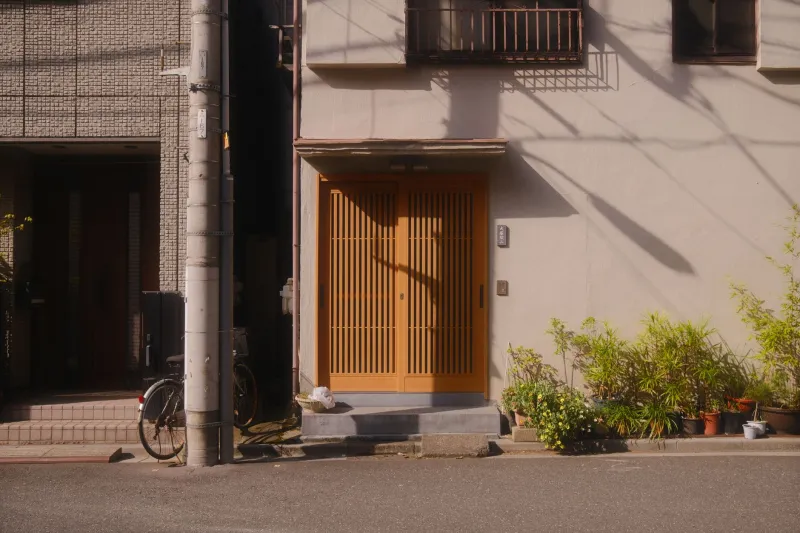
At the center of this philosophy is the concept of ma — a Japanese term that translates loosely as "negative space" or "meaningful pause." In architectural terms, ma refers to the deliberate use of empty or transitional space to create psychological breathing room. A narrow corridor between a private bedroom and a shared kitchen, a small garden courtyard visible from multiple units, a half-open sliding door that signals availability without demanding interaction — these are not accidents of design. They are intentional instruments of social calibration.
Japanese co-living developers such as Hituji Incubate and the operators behind the widely studied "Share House" model have built entire residential frameworks around this principle. Residents maintain private sleeping quarters but share kitchens, lounges, laundry facilities, and often rooftop gardens. Crucially, the design of shared spaces is engineered to encourage spontaneous, low-stakes interaction — the kind that builds community gradually rather than forcing it.
What American Developers Are Beginning to Understand
Several American real estate firms have begun studying Japan's co-living infrastructure with serious intent. Companies operating in cities such as Seattle, Austin, and Washington, D.C., have quietly engaged Japanese design consultancies to explore how ma-informed spatial logic might be applied to American residential projects.
The appeal is not merely aesthetic. The economic arithmetic of co-living is compelling. By reducing the square footage dedicated to individual units while investing in high-quality shared amenities, developers can lower per-resident costs while simultaneously delivering a lifestyle product that commands a premium among younger renters who prioritize experience over square footage. In markets where a one-bedroom apartment routinely exceeds $2,500 per month, a well-designed co-living unit offering private sleeping space and curated communal areas at $1,400 per month represents a meaningful value proposition.
But the more sophisticated American operators are beginning to understand that the financial model only works if the social architecture works first. This is where Japan's design philosophy offers something that Western co-living concepts have historically struggled to deliver: a coherent theory of how physical space shapes human behavior.
From Share Houses to Neighborhood Scale
Japan's influence on American urban planning extends beyond individual residential buildings. Several Japanese municipalities have pioneered what planners call "community anchor" design — the strategic placement of shared civic infrastructure, such as public bathhouses, community gardens, and covered market streets, to create natural gathering points that reduce isolation at the neighborhood level.
This concept resonates strongly with American urban planners grappling with the social consequences of suburban sprawl and car-dependent development. The traditional American suburb, optimized for private homeownership and automobile access, has been widely implicated in rising rates of social disconnection. Japanese urban design, by contrast, tends to assume that walking, proximity, and incidental encounter are features rather than inconveniences.
Planning departments in cities including Minneapolis, Denver, and Portland have begun incorporating elements of this philosophy into new mixed-use zoning frameworks. The idea is not to import Japanese urbanism wholesale but to extract its underlying logic — that community is not a byproduct of housing; it must be deliberately designed into it.
The Cultural Translation Challenge
Adapting Japanese spatial philosophy for American contexts is not without its complications. American cultural norms around privacy, personal space, and homeownership carry enormous weight — both psychologically and politically. The notion of sharing a kitchen with strangers, however elegantly designed the space, runs against deeply ingrained assumptions about what a home should feel like.
Japanese architects who have worked on American projects note that the translation process requires sensitivity to local context. What functions as a natural social lubricant in a Japanese share house — a communal dining table positioned at the intersection of several private corridors, for instance — may feel intrusive or overly prescriptive to American residents accustomed to controlling the terms of their social engagement.
The most successful American adaptations, practitioners say, tend to err on the side of optionality. Rather than designing spaces that compel interaction, they design spaces that reward it. A rooftop terrace that is beautiful enough to draw residents out voluntarily, a well-lit communal workspace that functions as a genuine alternative to a home office, a shared pantry stocked with local produce that makes cooking together an attractive option rather than an obligation — these are the design moves that appear to resonate most strongly with American residents.
A Quiet but Growing Influence
The flow of ideas between Japanese residential design and American urban planning remains largely beneath the radar of mainstream real estate discourse. It does not generate the headlines that accompany major cross-border investment announcements or trade policy debates. But its potential impact on American cities — and on the millions of Americans who report feeling chronically isolated — may ultimately prove more durable than any single financial transaction.
Japan has spent decades building residential environments that treat community not as an amenity but as infrastructure. As American cities search for practical, scalable responses to the twin crises of housing unaffordability and social disconnection, that accumulated expertise represents a resource whose value is only beginning to be recognized.
The design principles are transferable. The challenge, as with so much of what Japan has to offer the world, lies in understanding them deeply enough to apply them wisely.