Japan's Silver Economy Opens a Wide Door for American Biotech, AI, and Telehealth Innovators
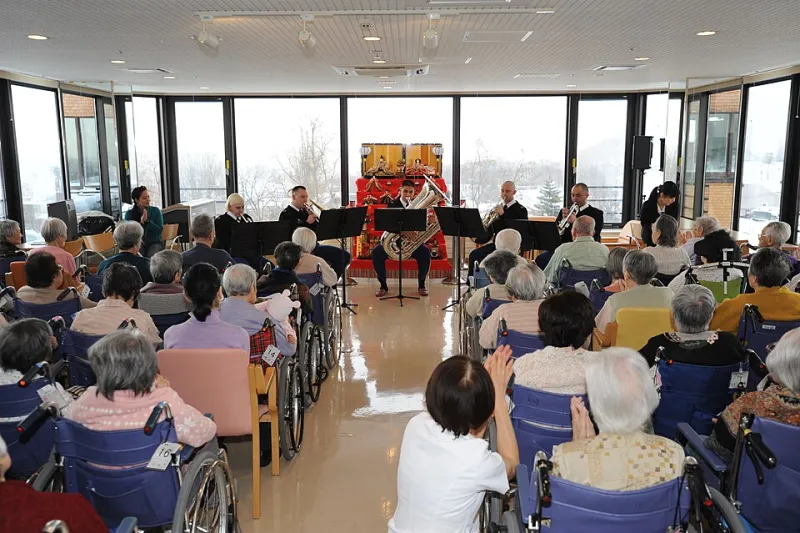
Photo: Chief Petty Officer Daniel Sanford, Public domain, via Wikimedia Commons
By 2030, nearly one in three Japanese citizens will be 65 or older. By 2040, the country's working-age population is projected to shrink by more than 10 million people relative to current levels. These are not projections drawn from speculative modeling—they are the arithmetic consequence of decades of low birth rates and rising life expectancy, and they are already reshaping every sector of the Japanese economy.
For American companies operating at the intersection of healthcare, technology, and aging services, Japan's demographic trajectory represents something unusual: a crisis with a known timeline, a government motivated to act, and a consumer base with the wealth and the need to adopt solutions quickly. The resulting market opportunity, by some estimates, approaches $500 billion across healthcare services, assistive technology, elder care infrastructure, and related fields over the next decade.
A Market Defined by Urgency
Japan's Ministry of Health, Labour and Welfare has been explicit about the scale of the coming strain on its national healthcare system. The country's universal coverage model, while admired globally, was designed for a population with a very different age distribution than the one now materializing. Nursing home capacity is insufficient. Caregiver shortages are severe and worsening. Chronic disease management for conditions associated with aging—dementia, cardiovascular disease, mobility disorders—demands innovation that the domestic healthcare system alone cannot supply at the required pace.
This urgency has translated into regulatory flexibility that is unusual for Japan, a country whose approval processes for medical devices and pharmaceuticals have historically been among the most demanding in the world. In 2014, Japan introduced the Sakigake designation system, a priority review pathway for breakthrough therapies targeting serious conditions—including many associated with aging. The government has since expanded incentives for foreign companies bringing novel solutions to market, including expedited consultations with the Pharmaceuticals and Medical Devices Agency (PMDA).
For US biotech firms already familiar with FDA breakthrough therapy designations, the conceptual parallel is meaningful. The strategic implication is straightforward: companies that have built regulatory expertise navigating accelerated US pathways are better positioned than they may realize to pursue parallel tracks in Japan.
Telehealth's Untapped Geography
Japan's geography amplifies its demographic challenge in ways that create specific openings for American telehealth providers. The country's rural prefectures—many of which have already experienced decades of population decline—face acute shortages of physicians, specialists, and mental health professionals. Elderly residents in these communities often travel significant distances for routine care, a burden that compounds as mobility decreases with age.
Remote patient monitoring, AI-assisted diagnostics, and video-based consultations are not novel concepts in the US market, but their application in Japan's rural elder care context has barely begun to scale. American telehealth companies that have refined their platforms for low-bandwidth environments, simplified user interfaces, or multilingual support are finding receptive partners among Japanese regional hospital networks and municipal governments.
The COVID-19 pandemic accelerated Japan's acceptance of telemedicine in ways that would have seemed improbable as recently as 2018. Regulatory changes introduced during the pandemic period have been largely preserved, opening a sustained window for foreign providers to establish commercial footholds before the market consolidates.
Artificial Intelligence as Infrastructure
Perhaps no sector is better positioned to capitalize on Japan's aging crisis than American AI companies—particularly those developing applications in predictive health analytics, robotic assistance, and cognitive support.
Japan has long been a global leader in robotics manufacturing, but the application of AI-driven robotics to elder care has accelerated under demographic pressure. The Japanese government has actively subsidized the development and deployment of nursing-assist robots, fall-detection systems, and companion AI devices. American AI firms bring complementary strengths: large training datasets, sophisticated natural language processing, and experience deploying AI in complex, regulated healthcare environments.
Several US companies have already begun establishing research and commercial partnerships with Japanese institutions. IBM Japan has maintained deep ties with domestic healthcare organizations for years. Newer entrants—including several Series B and Series C stage startups focused on dementia care, remote monitoring, and geriatric rehabilitation—are increasingly targeting Japan as a primary international market rather than an afterthought.
The strategic logic is compelling: Japan's concentrated population of elderly patients provides the kind of real-world deployment environment that is difficult to replicate in the more fragmented US healthcare landscape. A solution that achieves clinical and commercial validation in Japan carries significant credibility in subsequent pitches to European and Southeast Asian markets facing similar, if less advanced, demographic curves.
Navigating the Cultural and Regulatory Terrain
Entry into Japan's healthcare market is not without friction. American companies accustomed to the relative openness of the US health technology market will encounter a system that prizes institutional relationships, operates through dense networks of intermediaries, and moves at a pace that can frustrate growth-stage startups conditioned to rapid iteration.
Successful market entrants consistently cite two factors as decisive: a committed local partner and a willingness to invest in Japanese-language capability at every level of the customer relationship. Japan's elder care professionals and their patients are not early adopters by temperament; trust is built through demonstrated presence and sustained engagement, not marketing campaigns.
Regulatory navigation also demands dedicated resources. The PMDA's review standards for AI-based medical devices have evolved rapidly, and the agency has issued specific guidance on software as a medical device (SaMD) that differs in meaningful ways from FDA frameworks. Companies that treat Japanese regulatory compliance as a derivative of their US approval strategy often encounter costly delays.
The Validation Premium
Beyond the direct commercial opportunity, there is a strategic dimension to Japan market success that American executives would be wise to consider carefully. Japan's healthcare consumers are sophisticated, its regulatory standards are rigorous, and its outcomes data is among the most systematically collected in the world. A product or platform that achieves meaningful adoption in Japan's elder care system carries an implicit endorsement that resonates with institutional buyers, sovereign wealth fund investors, and regulatory bodies across Asia and Europe.
In this sense, Japan is not merely a destination market. It is a proving ground—one whose demographic urgency has created a rare alignment between public need, government support, and private capital that American healthcare and technology companies are only beginning to fully appreciate.