The Third Place Revival: How Japan's Kissaten Tradition Is Quietly Solving America's Remote Work Crisis
For much of the past four years, American professionals have been told that the future of work is wherever they happen to open their laptops. And yet, something has quietly gone wrong. Productivity metrics have flattened in knowledge-intensive industries. Junior employees report feeling professionally adrift. Mentorship, once transmitted through hallway conversations and shared lunches, has largely evaporated. The home office, it turns out, is a poor substitute for the rich, unscripted social infrastructure of a physical workplace.
In searching for solutions, a growing number of American workplace designers, HR strategists, and entrepreneurs are looking eastward—specifically to Japan's kissaten culture, a tradition of artisanal, atmosphere-forward coffee houses that dates back to the early twentieth century and has quietly shaped how Japanese professionals think about focus, community, and the productive value of place.
What a Kissaten Actually Is—and Isn't
The kissaten is frequently mischaracterized in Western media as simply an old-fashioned Japanese café. That description misses the point almost entirely. A kissaten is, at its core, a curated environment—one designed to slow the visitor down, encourage extended stays, and foster a particular quality of concentration that the Japanese sometimes describe as mushin, a state of mental clarity unencumbered by distraction.
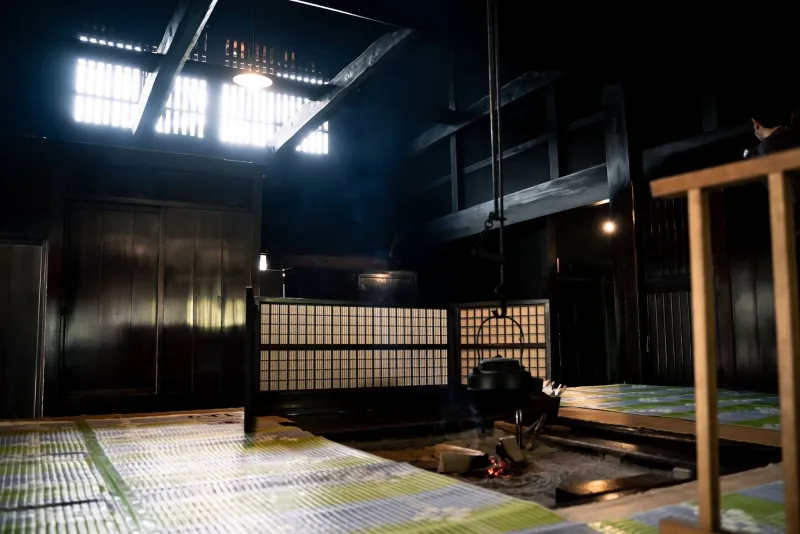
Unlike the loud, transactional atmosphere of a typical American chain coffee shop, a traditional kissaten prizes acoustic restraint. Music, when present, is selected with deliberate care—often vinyl jazz or classical recordings played at low volume. Lighting tends toward the warm and indirect. Seating arrangements are designed to offer both proximity to others and a meaningful degree of personal privacy. The coffee itself is prepared slowly and with visible craft, reinforcing a broader cultural message: some things are worth waiting for.
Critically, the kissaten has historically served as what urban sociologist Ray Oldenburg famously called a 'third place'—a social environment distinct from home and the formal workplace, where informal relationships form and professional knowledge circulates without agenda. In postwar Tokyo and Osaka, kissaten functioned as de facto meeting rooms for writers, artists, business people, and academics. Ideas crossed professional boundaries. Mentorship happened sideways, not just vertically.
The Productivity Paradox That Japan Recognized Early
Japan has its own complicated relationship with workplace productivity. The country's notorious culture of long office hours has drawn sustained international criticism, and rightly so. But embedded within Japanese professional life is a countervailing wisdom: that unstructured time in a well-designed environment frequently generates the kind of lateral thinking that structured meetings cannot.
This insight did not go unnoticed by Japan's corporate class. Throughout the twentieth century, many of Tokyo's most influential business negotiations were initiated not in boardrooms but over extended kissaten visits. The unhurried pace was not inefficiency—it was strategy. Relationships built slowly tend to hold more weight, and decisions made after genuine conversation tend to carry broader organizational buy-in.
American companies, by contrast, have spent decades optimizing for speed. Sprint planning, rapid iteration, and asynchronous communication tools have compressed professional interaction into its most transactional form. The result is an economy of tremendous output but diminishing relational depth—a condition that the remote work era has accelerated dramatically.
How American Entrepreneurs Are Translating the Model
A quiet but meaningful wave of third-place innovation is underway across American cities, and Japan's kissaten tradition is a visible influence. In cities including Portland, Austin, Seattle, and New York, a new category of workspace has emerged that deliberately rejects the frenetic energy of conventional co-working in favor of something closer to the kissaten ethos.
These spaces share several design principles drawn, consciously or otherwise, from their Japanese antecedents. Acoustic dampening is prioritized over open-plan noise. Natural materials—wood, stone, ceramic—replace the exposed concrete and industrial metal that dominated co-working design in the 2010s. Membership models are structured to encourage regulars rather than transient drop-ins, cultivating the kind of community continuity that allows informal professional relationships to develop over time.
Some operators are explicit about their inspiration. Sōma, a members-only workspace concept that launched in San Francisco in 2023, lists the kissaten among its founding references and employs a hospitality model that borrows from Japanese service philosophy—staff are trained to recognize members' preferences and to facilitate introductions between guests with complementary professional interests.
Corporate HR departments are taking note as well. Several mid-sized technology firms have begun piloting what they internally describe as 'analog offsite' programs—structured gatherings held not in hotel conference rooms but in carefully selected third places, including Japanese-inspired tea and coffee environments, with the explicit goal of recreating the serendipitous knowledge exchange that remote work has eliminated.
The Mentorship Dimension
Perhaps the most consequential application of the kissaten model lies in its potential to restore informal mentorship—a casualty of remote work that has received far less attention than it deserves.
Research from Stanford and Harvard in recent years has consistently found that junior employees in remote or hybrid arrangements develop professional skills more slowly than their in-person counterparts. The primary mechanism is not formal training but ambient learning: the accumulation of professional judgment absorbed through proximity to experienced colleagues. When that proximity disappears, so does the learning.
The kissaten, by design, creates the conditions for ambient learning to occur. When a junior professional shares a physical environment with senior peers over an extended, unstructured period, knowledge transfers in ways that no Zoom call can replicate. Tone, judgment, decision-making instinct—these are transmitted through observation and informal conversation, not through slide decks.
Forward-thinking American organizations are beginning to treat third-place investment as a mentorship strategy rather than merely a workplace amenity. The calculus is straightforward: the cost of maintaining a curated third-place environment for a professional community is modest relative to the cost of the talent attrition and skill stagnation that its absence accelerates.
A Cultural Translation Worth Making
Adapting the kissaten model for an American context is not without its complications. American professional culture tends toward efficiency and purposefulness in ways that can make the deliberate unhurriedness of a kissaten feel counterintuitive, even uncomfortable. The instinct to fill every moment with measurable output runs deep.
But that discomfort may itself be the point. The kissaten's enduring value lies precisely in its resistance to optimization—in its insistence that some of the most important professional work happens in the unscheduled margins, over a carefully prepared cup of coffee, in a room designed to make you want to stay.
As American companies continue to wrestle with the human costs of distributed work, Japan's centuries-old answer to the question of where good thinking happens deserves serious consideration. The kissaten is not nostalgia. It is infrastructure—analog, unhurried, and quietly indispensable.