The Meeting Before the Meeting: Why Async America Is Quietly Reinventing Nemawashi

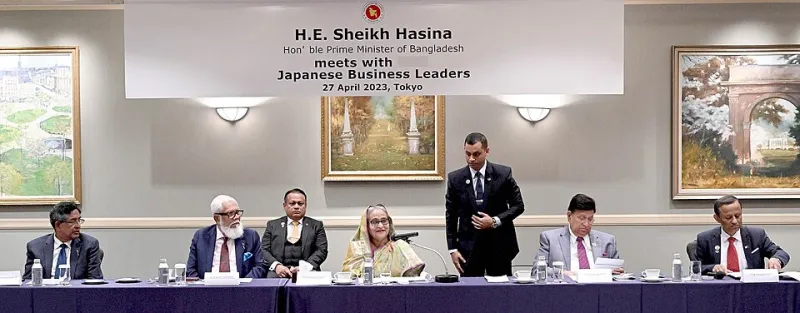
Photo: CamEd Business School, CC BY-SA 4.0, via Wikimedia Commons
There is a particular kind of meeting familiar to anyone who has worked at a large American company. It was scheduled to make a decision. It runs forty minutes over. No decision is made. A follow-up is scheduled.
Japanese business culture has a name for the antidote: nemawashi, literally "turning the roots" before transplanting a tree. Long before any formal meeting, the real work of persuasion happens — one-on-one conversations, quiet soundings, the careful cultivation of agreement among everyone whose support matters. By the time the meeting convenes, the decision has, in effect, already been made. The meeting ratifies it.
For decades, American managers dismissed this as inefficiency dressed in etiquette. The calendar says 2 p.m., the decision gets made, everyone moves on. Speed was the point.
Then came remote work. And something strange happened: American companies started rebuilding nemawashi from first principles, without realizing it.
The Accidental Return of the Pre-Meeting
Look at how decisions actually move through a distributed organization in 2025. A product leader circulates a pre-read document two days before the review. Colleagues leave comments in the margins. Side conversations happen in Slack threads and DMs. By the time the video call begins, the contentious issues have been identified, objections pre-empted, and the loudest skeptic has already been privately heard.
That is nemawashi. The tools changed — Slack instead of the smoky nomikai, Figma comments instead of hallway conversations — but the underlying logic is identical: decisions are social processes, and the formal meeting is merely their public confirmation.
Companies like Amazon institutionalized this years ago with six-page narrative memos read in silence before discussion begins. Stripe, GitLab, and most async-native startups have built their operating rhythms around written pre-alignment. The vocabulary is American; the practice is Japanese.
Why Skipping the Groundwork Kills Hybrid Decisions
Here is the argument worth making plainly: the reason so many return-to-office mandates, reorgs, and strategy pivots have landed badly in American companies is not that the decisions were wrong. It is that they were announced without nemawashi.
Consider the pattern. A leadership team deliberates privately for weeks. The decision lands in an all-hands or a company-wide email. Employees — who had no input, no warning, and no channel through which to be heard — react as though ambushed. Leadership interprets the backlash as resistance to change. Trust erodes.
The nemawashi approach inverts this. Concerns surface before the decision is final, when they can still shape it. The employees most affected become participants in the process rather than audiences for its conclusion. Consent, not compliance, becomes the mechanism of implementation.
This is not consensus by committee. Japanese nemawashi preserves clear decision authority — the leader still decides. What it changes is the sequence: listening first, deciding second, announcing third.
The Objection, and the Answer
The standard critique holds that all this informal alignment is a tax on speed — that fast-moving American companies cannot afford weeks of one-on-ones before every decision.
But the remote-work era has exposed the hidden cost of skipping it: decisions that stall anyway. The follow-up meeting. The rework. The quiet non-compliance of a team that never bought in. The re-announcement of a policy that failed the first time. American companies did not eliminate nemawashi; they simply did it after the decision, in the form of damage control, which is the most expensive possible sequencing.
There is also a genuine warning for American adopters. Nemawashi practiced without transparency curdles into exclusion — decisions that feel pre-cooked by an inner circle, which is precisely the complaint many employees level at their leadership today. The healthy version documents the groundwork: pre-reads circulated widely, dissent recorded, the reasoning visible to those affected.
A Practical Starting Point
For leaders experimenting with this: before your next significant decision, identify every person whose support is necessary, and talk to each of them individually before anything is announced. Circulate the proposal in writing with time for genuine comment. Let the meeting be a confirmation, not a debate.
It will feel slow. It is, in fact, the fastest path available — because a decision that everyone helped build does not need to be sold afterward. Japanese executives learned this over generations. Distributed American teams are learning it now, one pre-read at a time.