From Fukushima to the Future: Why US Investors Are Quietly Betting Big on Japan's Clean Energy Transformation
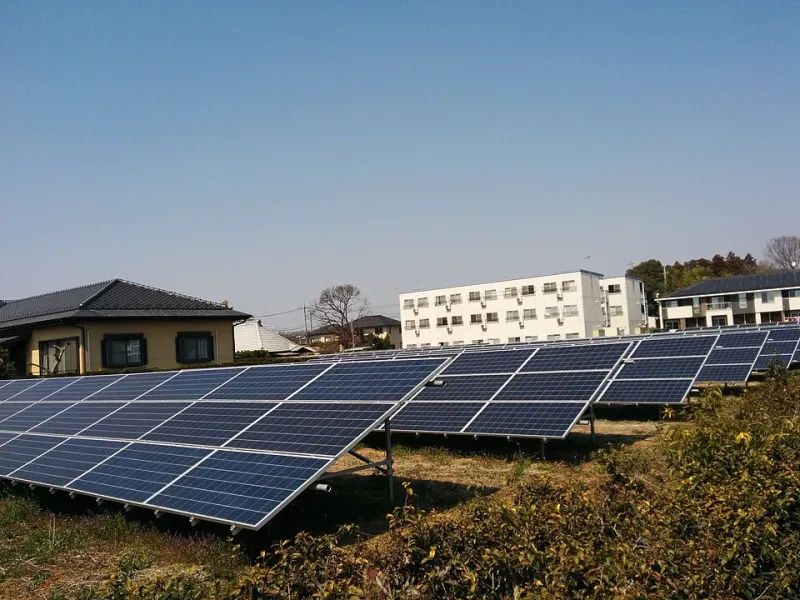
Photo: Tyuvc, CC BY-SA 4.0, via Wikimedia Commons
For years, the dominant narrative around Japan's energy sector was one of crisis and caution. The March 2011 meltdown at the Fukushima Daiichi nuclear plant did not merely contaminate a stretch of Pacific coastline—it fundamentally destabilized the assumptions underpinning an entire national energy strategy. Japan, a country that had staked roughly 30 percent of its electricity generation on nuclear power, suddenly found itself scrambling.
What emerged from that scramble, however, was not paralysis. It was reinvention.
Today, Japan stands at the forefront of a clean energy transition that is attracting capital from across the Pacific. American investors—ranging from Silicon Valley venture funds to major institutional asset managers—are increasingly viewing Japan's renewable energy sector not as a recovery story, but as a genuine growth opportunity with global implications.
A Policy Architecture Built for the Long Game
Japan's clean energy ambitions are codified in law and backed by the kind of bureaucratic seriousness that Tokyo is known for. The country's Sixth Strategic Energy Plan, adopted in 2021, sets a target of generating 36 to 38 percent of electricity from renewable sources by 2030—a figure that would have seemed fantastical in the immediate post-Fukushima years. More ambitiously still, Japan has committed to achieving carbon neutrality by 2050, a pledge that carries significant weight given the country's status as the world's third-largest economy.
These are not aspirational talking points. The Japanese government has backed its targets with substantial public investment, regulatory reform, and a feed-in tariff system that has already catalyzed billions of dollars in private-sector activity. The Ministry of Economy, Trade and Industry has also rolled out its Green Innovation Fund—a 2 trillion yen initiative designed to accelerate breakthroughs in hydrogen, offshore wind, and next-generation solar technology.
For American investors accustomed to navigating the policy uncertainty that frequently surrounds clean energy legislation in Washington, Japan's structured, long-term regulatory framework presents a compelling contrast.
Hydrogen: Japan's Moonshot Technology
If there is one area where Japan's clean energy ambitions have most captured the imagination of US investors, it is hydrogen. Japan has positioned itself as a global leader in hydrogen technology with an intensity that few other nations have matched. The country's Basic Hydrogen Strategy, first published in 2017 and revised in 2023, envisions a comprehensive hydrogen supply chain spanning production, storage, transport, and end-use applications across industrial, transportation, and power-generation sectors.
Japanese corporations—including Toyota, Kawasaki Heavy Industries, and Iwatani Corporation—have made hydrogen a central pillar of their long-term business strategies. Toyota's hydrogen fuel cell vehicles, while still a niche product in the US market, represent years of accumulated intellectual property that American automotive and energy investors are beginning to assess more seriously.
American venture capital firms have taken note. Several prominent funds with Pacific Rim mandates have increased their exposure to Japanese hydrogen startups and adjacent technologies, recognizing that the infrastructure Japan is building domestically may well serve as a template—and a supply chain anchor—for hydrogen adoption in North America.
Solar and Battery Technology: Homegrown Disruptors
Beyond hydrogen, Japan's solar and battery sectors are producing companies that are beginning to challenge established players in global markets. Panasonic's collaboration with Tesla on battery cell production at the Nevada Gigafactory is perhaps the most visible example, but it represents only a fraction of the cross-Pacific activity underway.
Japanese firms have made notable advances in perovskite solar cells—a next-generation photovoltaic technology that promises higher efficiency and lower manufacturing costs than conventional silicon panels. Companies such as Sekisui Chemical are advancing flexible perovskite modules that could eventually be integrated into building materials, opening an enormous addressable market. US-based investors tracking the solar supply chain have begun positioning themselves in Japanese firms working at this frontier, anticipating that perovskite technology could reshape the economics of solar deployment within this decade.
On the battery side, Japan remains home to some of the world's most sophisticated solid-state battery research. Toyota has publicly committed to commercializing solid-state batteries for electric vehicles by the late 2020s—a development that could have profound consequences for the US electric vehicle market, where battery performance and range anxiety remain persistent consumer concerns.
Why American Capital Is Moving Now
The timing of this investor interest is not coincidental. Several converging factors have made Japan's clean energy sector particularly attractive to American capital at this moment.
First, the US Inflation Reduction Act has accelerated domestic clean energy investment, creating a sophisticated investor class that is now looking internationally for complementary opportunities and supply chain partners. Japan's technological capabilities in battery and hydrogen sectors align directly with the supply chain ambitions embedded in the IRA's domestic content requirements.
Second, the relative stability of the Japanese yen in recent years—combined with the Bank of Japan's gradual normalization of monetary policy—has reduced some of the currency risk that historically deterred longer-term US investment in Japanese assets.
Third, and perhaps most importantly, Japan has made a concerted effort to open its startup ecosystem to foreign capital. Regulatory changes have simplified the process for overseas investors to participate in Japanese venture rounds, and English-language investor relations have improved markedly at a growing number of clean-tech companies.
Challenges That Remain
None of this is to suggest that investing in Japan's clean energy sector is without complexity. Grid infrastructure constraints continue to limit the speed at which renewable capacity can be absorbed into Japan's electricity system. Land scarcity—a perennial challenge for large-scale solar and wind development on the Japanese archipelago—means that offshore installations and urban integration will bear a disproportionate share of the expansion burden.
Cultural and language barriers, while diminishing, have not disappeared. American investors who approach Japan expecting the transactional speed of a Silicon Valley deal cycle are frequently frustrated by the deliberate, consensus-driven processes that govern many Japanese corporate decisions.
Nevertheless, the trajectory is clear. Japan's post-Fukushima energy transformation, once viewed primarily as a domestic policy challenge, has become a cross-Pacific investment story of genuine substance. For US investors with the patience and cultural literacy to engage with it seriously, the opportunities embedded in that story are only beginning to come into focus.