Precision on the Plate: How Japan's Rigorous Food Safety Discipline Is Reshaping American Industry Standards
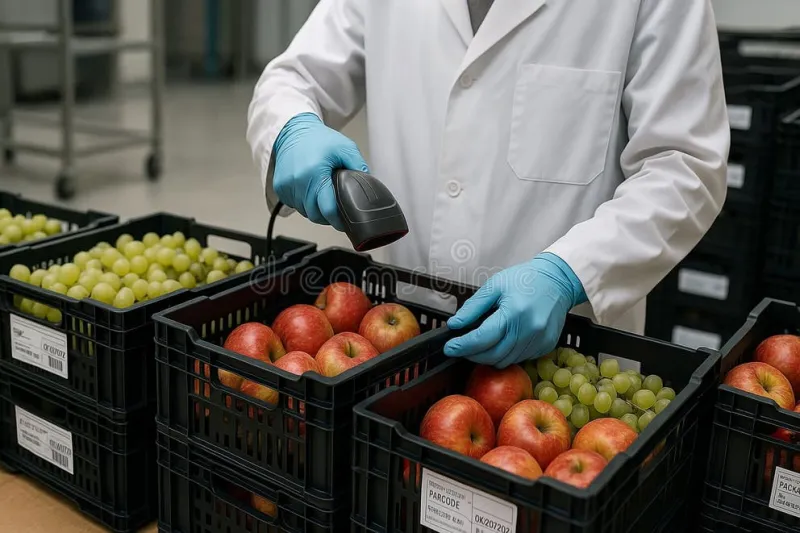
Photo: Japanese food safety inspection fresh produce supply chain traceability technology, via thumbs.dreamstime.com
Walk into a high-end Japanese supermarket and the experience is immediately instructive. Produce is individually wrapped, labeled with the name of the farm that grew it, and in some cases accompanied by the photograph of the farmer responsible. Fish counters display the catch date, the vessel that caught it, and the port of origin. Prepared foods carry detailed allergen disclosures that go well beyond regulatory minimums. This is not premium theater. It is the baseline expectation of an ordinary Japanese grocery customer.
That standard — rooted in decades of cultural conditioning, regulatory rigor, and industrial discipline — is beginning to cross the Pacific. American food companies, restaurant groups, and retail chains are increasingly looking to Japan not merely as a culinary inspiration but as an operational model. The question is no longer whether Japanese food safety methodologies have something to offer the US market. It is how quickly American industry can absorb them.
Where Japan's Food Safety Culture Comes From
Japan's obsession with food integrity did not emerge from a single regulatory mandate. It evolved from a layered history of public health crises, consumer advocacy, and a cultural orientation toward precision and accountability that permeates the country's industrial life.
The food poisoning outbreaks of the 1990s — including a large-scale E. coli incident involving school lunches in 1996 that sickened thousands — triggered sweeping reforms to Japan's food safety infrastructure. But the philosophical underpinning was already present. The same kaizen discipline that transformed Japanese manufacturing — the relentless, incremental pursuit of improvement and error elimination — had long been applied to food production. Quality was not a marketing claim. It was an engineering problem to be systematically solved.
The result is a food system built around what Japanese industry calls traceability by default. Every node in the supply chain is documented, auditable, and in many cases digitally accessible to the end consumer. Temperature logs for cold chain logistics are not spot-checked — they are continuous. Sanitation protocols in food processing facilities are not guidelines — they are timed, verified, and recorded.
American Adoption: From Sushi Counters to Factory Floors
The entry point for Japanese food safety practices in the United States has, not surprisingly, been the food service industry's Japanese-cuisine segment. The rapid expansion of Japanese restaurant concepts across American cities — from omakase dining rooms in Manhattan to fast-casual ramen chains in Houston and Los Angeles — created a cohort of operators who sourced directly from Japanese suppliers and were therefore exposed to Japanese standards firsthand.
What many of those operators discovered was that their domestic US supply chains could not meet the documentation and traceability requirements they had come to regard as standard. That gap prompted some to begin selectively applying Japanese protocols to their American sourcing relationships — requiring farm-level origin documentation, tightening cold chain specifications, and introducing Japanese-style receiving inspections at the restaurant level.
The influence has since moved upstream. Several US food manufacturers supplying Japanese restaurant chains and Japanese-owned grocery retailers have undertaken significant operational overhauls to meet buyer specifications. In doing so, they have effectively imported Japanese standards into their broader production processes — standards that then apply to all of their customers, not just their Japanese accounts.
One Midwest-based protein processor that began supplying a Japanese-owned food distribution network described the experience as transformative. "They sent their own quality engineers to our facility," a company operations executive explained. "Not to inspect us, but to teach us. The documentation systems, the sanitation sequencing, the line hygiene checkpoints — we implemented all of it. And our defect rates dropped significantly across the board."
The Technology Bridge
Japan's food safety infrastructure has always been data-intensive, but the digitization of that infrastructure has accelerated its exportability. Japanese firms specializing in food traceability technology — including blockchain-based provenance systems and IoT-enabled cold chain monitoring platforms — have begun entering the US market, finding receptive audiences among grocery retailers and food service distributors.
Several major American grocery chains have piloted Japanese-origin traceability platforms in their seafood and produce departments, enabling the kind of granular origin disclosure that Japanese consumers have expected for years. Early consumer response data suggests that American shoppers, particularly in the 25-to-45 demographic, respond positively to detailed provenance information — a finding that aligns with broader trends in US consumer demand for transparency.
The convergence of Japanese methodology with American technology infrastructure is also producing hybrid innovations. US food tech startups are licensing or adapting Japanese traceability frameworks and building them into software platforms designed for the domestic market's regulatory environment and supply chain architecture. The intellectual lineage is Japanese; the implementation is distinctly American.
Where the Friction Points Lie
The adoption of Japanese food safety practices in the US is not without complications. The American food supply chain is vastly larger, more geographically dispersed, and more structurally fragmented than Japan's. Implementing granular traceability across a supply chain that may involve dozens of intermediaries across multiple states is a logistical and financial undertaking that many smaller producers and processors cannot readily absorb.
There is also a cultural dimension. Japan's food safety culture is reinforced by social expectations that have been built over generations. American food industry workers and managers, operating within a different regulatory tradition and a different set of commercial incentives, do not automatically share those expectations. Training programs that transfer technical protocols without also conveying the underlying philosophy tend to produce compliance without genuine adoption — a distinction that becomes apparent when systems are stressed.
Regulatory alignment presents another layer of complexity. Japan's food safety standards in certain categories — particularly for pesticide residues and food additives — are more stringent than US Food and Drug Administration benchmarks. American producers seeking to fully adopt Japanese standards for domestic sales may find themselves operating above legal requirements in ways that create cost disadvantages relative to competitors who do not.
The Consumer Pull
Ultimately, the most powerful driver of Japanese food safety adoption in the United States may not be industry initiative — it may be consumer expectation. American consumers have demonstrated, through purchasing behavior and willingness-to-pay studies, a growing preference for food products with verifiable origin, transparent handling histories, and credible safety documentation.
That preference is still unevenly distributed across income levels and geographies. But its direction is clear. As US consumers become more informed and more demanding, the gap between what Japan's food system routinely delivers and what America's food system currently provides will become increasingly visible — and increasingly untenable for companies that depend on consumer trust.
For US food businesses willing to invest in the operational transformation that genuine adoption requires, Japan's precision-driven model offers something valuable: not a foreign standard to be reluctantly met, but a competitive differentiator to be strategically embraced.