Serving Without Being Asked: How Omotenashi Is Giving American Businesses a Competitive Edge in the Experience Economy
In an era when nearly every product can be replicated and every price undercut, American companies are increasingly searching for competitive advantages that cannot be easily copied. A growing number of them are finding that edge not in Silicon Valley, but in the service philosophy of a nation thousands of miles away.
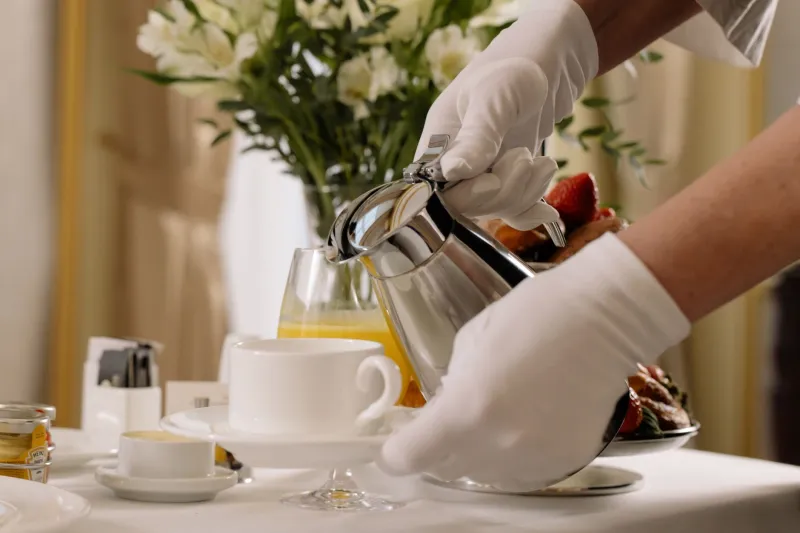
Omotenashi—a Japanese concept often translated as "wholehearted hospitality"—describes an approach to service that is anticipatory rather than reactive, empathetic rather than procedural, and rooted in a genuine desire to honor the guest without expectation of recognition or reward. In Japan, it is the invisible architecture behind everything from a ryokan inn attendant who silently refreshes your tea before you realize it has grown cold, to a convenience store clerk who instinctively wraps your umbrella before handing it to you on a rainy afternoon. It is service as a form of respect, not transaction.
For American businesses navigating what analysts increasingly call the "experience economy," this philosophy is no longer a cultural curiosity. It is becoming a strategic priority.
The Commoditization Problem Driving the Search for Differentiation
The pressure to differentiate on experience rather than product has never been more acute. Consumer research consistently shows that Americans are willing to pay a premium for superior service—and equally willing to abandon brands permanently after a single poor interaction. A 2023 survey by PwC found that 32 percent of US consumers would walk away from a brand they loved after just one bad experience. In that environment, transactional service models—scripted, efficiency-focused, and fundamentally reactive—are no longer sufficient.
This is precisely where omotenashi offers something structurally different. Rather than training employees to respond to stated needs, it trains them to anticipate unstated ones. The distinction sounds subtle but carries enormous commercial weight. A customer who receives what they asked for feels satisfied. A customer who receives what they needed before they knew to ask for it feels something closer to loyalty.
American Brands Quietly Embedding Japanese Service Principles
Several prominent US companies have moved beyond admiring omotenashi from a distance and begun embedding its principles into their operational DNA.
Ritz-Carlton Hotels, long regarded as a benchmark for American luxury hospitality, has incorporated anticipatory service frameworks that bear a clear philosophical resemblance to omotenashi. The company's well-documented "Ladies and Gentlemen serving Ladies and Gentlemen" credo instructs staff to fulfill unexpressed as well as expressed wishes—a formulation that mirrors the Japanese concept almost precisely. Employees are empowered to spend up to $2,000 per guest, per incident, to resolve problems or create memorable moments without managerial approval. The underlying logic is omotenashi-adjacent: trust the person closest to the guest to honor that guest fully.
In the technology sector, Zappos built an entire corporate identity around service generosity that echoes Japanese hospitality norms. The company's now-legendary practice of upgrading customers to overnight shipping without announcement, or allowing support representatives to remain on calls for hours without time-based performance metrics, reflects a philosophy of service as intrinsic value rather than cost center. Founder Tony Hsieh explicitly cited Japanese service culture as an influence during the company's formative years.
More recently, a cohort of premium retailers—including several high-end grocery chains and direct-to-consumer luxury brands—have begun investing in what internal training documents describe as "silent attentiveness" programs: structured efforts to train floor staff in reading body language, anticipating navigation confusion, and offering assistance before it is requested. These programs draw directly from Japanese retail training methodologies, several of which have been adapted and licensed by American hospitality consultancies.
The Training Investment: Authentic Implementation Is Not Cheap
Adopting omotenashi superficially is straightforward. Adopting it authentically is considerably more demanding, and American organizations attempting the latter are discovering that the cultural translation requires sustained investment.
In Japan, omotenashi is not a training module—it is a disposition cultivated over years, reinforced by social norms, and expressed naturally rather than performatively. Transplanting it into an American organizational context, where service roles have historically carried lower social status and higher turnover rates, requires deliberate structural changes.
Companies that have made meaningful progress tend to share several characteristics. First, they invest heavily in the hiring process, selecting for empathy and situational awareness rather than scripted competency. Second, they extend onboarding timelines significantly—some luxury hospitality groups now run immersive service training programs lasting several weeks before a new employee interacts with a single guest. Third, and perhaps most critically, they work to shift internal culture so that service quality is treated as a source of professional pride rather than a performance metric to be managed.
Several US firms have partnered directly with Japanese hospitality consultancies or sent senior staff to train at Japanese service academies—institutions that have, for decades, codified and transmitted omotenashi principles with the same rigor that American business schools apply to finance or operations. The cost of these programs is non-trivial, but companies that have made the investment report measurable returns in customer retention and net promoter scores.
The Cultural Friction Points
None of this is without friction. American service culture and Japanese service culture rest on fundamentally different assumptions, and the gaps between them can create implementation challenges that are easy to underestimate.
In Japan, omotenashi is grounded in a cultural context that prizes group harmony, deference, and the subordination of individual expression to collective well-being. In the United States, both employees and customers tend to value individual autonomy and directness. An approach that feels warmly attentive in a Tokyo hotel can feel presumptuous or intrusive to an American guest who prefers to be left alone.
Calibrating anticipatory service for American sensibilities requires what practitioners describe as "contextual attentiveness"—reading the individual in front of you rather than applying a universal standard of care. This, ironically, is itself a deeply omotenashi-compatible instinct: the philosophy has always been about honoring the specific person, not performing a generalized ritual of hospitality.
There is also the question of employee experience. Omotenashi, practiced authentically, demands emotional labor of a high order. Organizations that ask this of their staff without providing commensurate compensation, recognition, and psychological support risk burning out the very people who carry the culture.
A Competitive Moat That Is Difficult to Replicate
For all its implementation challenges, omotenashi-informed service represents one of the more durable competitive advantages available to American businesses. Unlike a product feature or a pricing strategy, a deeply embedded service culture is extraordinarily difficult for competitors to replicate quickly. It cannot be reverse-engineered from a press release or acquired through a vendor contract. It must be grown—slowly, intentionally, from the inside out.
As US consumer expectations continue to rise and the cost of customer acquisition climbs, the companies investing now in this kind of cultural infrastructure may find themselves holding a moat that is both wide and, by its nature, nearly invisible to those on the outside.
Japan has long understood that how you serve someone communicates what you believe they are worth. American businesses are beginning to learn the same lesson—and to recognize that in a marketplace full of comparable products, that belief may be the most valuable thing they sell.