Twenty Employees, One Impossible Part: Inside the Japanese Shops American Hardware Founders Now Rely On

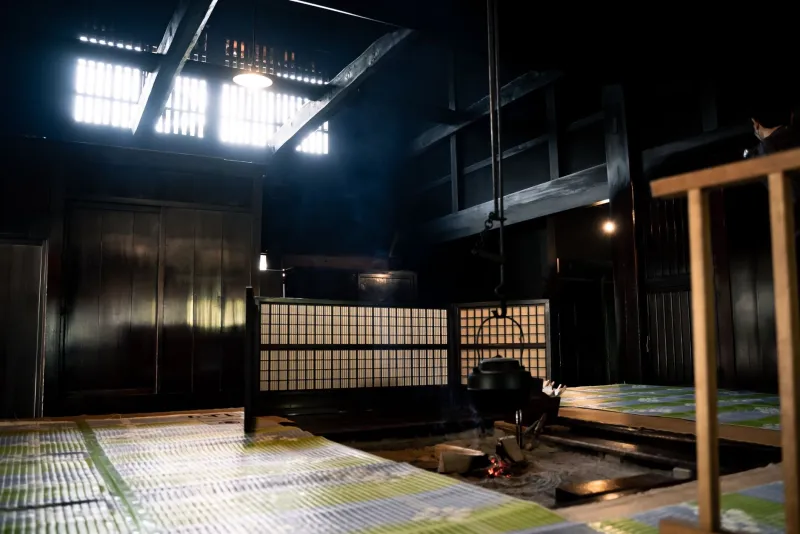
Photo by Photo by Call me LAMB~~~ on Unsplash on Unsplash
The building is unremarkable: three stories, corrugated siding, a vending machine by the door. Inside, twenty-two employees produce a component that three American robotics startups have failed to source domestically at acceptable yield. The shop runs two shifts. It has done the same work, for different masters, for fifty-one years.
This is a machikoba — literally a town factory — and it is the layer of Japanese manufacturing that almost never appears in a supply chain slide deck until something goes wrong.
A Twelve-Minute Walk, Four Suppliers
The density is the story. In a stretch of eastern Osaka, a founder can walk twelve minutes and pass a stamping shop, a heat-treatment specialist, a surface-finishing operation, and a metrology lab that will inspect a prototype the same week it arrives. In Tsubame-Sanjo, metalworking suppliers cluster within a few blocks. Around Hamamatsu, optics and instrument makers sit beside the automotive giants they have served for generations.
For hardware teams used to coordinating vendors across three time zones, the geography is a genuine advantage. A design change can be discussed on Thursday and tested on Monday, without a shipment.
Why Small Is the Point
Large Japanese manufacturers, for all their capability, are optimized for volume and predictability. A startup building two hundred units is not an attractive customer to a company with a production line designed for two hundred thousand.
The machikoba operates on different economics. Its business model is high-mix, low-volume work for many customers. That produces three things that American hardware founders value highly:
- Tolerance to iteration. Shops are accustomed to re-quoting, re-tooling, and re-checking a part until the specification is satisfied.
- Deep process knowledge in a narrow domain. A shop that has done nothing but precision grinding for four decades will solve problems that generalists cannot.
- Direct access to expertise. The person who answers your email may be the person who runs the machine — and may be the only person in the country who can run it.
Finding the Shop Nobody Advertises
These suppliers do not run performance marketing. Discovery is deliberate:
- Prefectural industrial promotion centers. Every prefecture maintains databases of local manufacturers with capability profiles, in English in many cases.
- JETRO. The trade organization runs programs connecting foreign companies to regional supplier networks, and can arrange introductions that a cold email cannot.
- Trade exhibitions. Manufacturing World Japan and JIMTOF draw thousands of small suppliers who exhibit precisely because they want new customers.
- Existing customers. Ask your Japanese contract manufacturer who machines its tooling. The answer is often a better partner than anything you will find through search.
- Trading companies. Sogo shosha and smaller specialist trading firms can act as a commercial bridge, handling contracts and logistics for a fee. Useful if you have no Japan presence.
Vetting Without a Playbook
A quality certificate is a starting point, not an answer. The questions that separate a viable partner from an expensive lesson are more specific:
- What is your process capability on this feature, and can you show the inspection data? Request historical data, not a promise.
- Who actually runs the machine? If one craftsman is the only person who can hold a critical tolerance, you have a single point of failure.
- What is your capacity at our next volume tier? Shops routinely accept orders they cannot scale.
- Who owns the tooling? Put it in writing. Ownership disputes at the end of a relationship are common and entirely avoidable.
- What happens when demand triples? The honest answer will reference a partner network, not a promise of overtime.
The most reliable test remains a small paid prototype order. It reveals communication cadence, documentation quality, and how the shop behaves when the specification changes.
The Operating Rhythm
Cultural friction is rarely about language. It is about time horizon and decision process. Japanese suppliers build consensus internally; a request that arrives without preparation can stall for weeks while it travels. Founders who succeed tend to adopt a recognizably Japanese rhythm:
- Share forecasts openly and early. A supplier who knows a ramp is coming can plan hiring and tooling. One who is surprised will decline.
- Prepare the ground before the meeting. Send the agenda and the data in advance. The meeting is for confirmation, not discovery.
- Write it down. Verbal assurances are a courtesy, not a commitment. Specifications, tolerances, and change orders belong in documents.
- Visit. Nothing substitutes for standing on the floor. A single annual visit changes the tenor of the relationship.
- Do not weaponize urgency. Escalation works once. Used repeatedly, it converts a partner into a vendor.
When It Goes Wrong
The risks are structural, not dramatic. Capacity is the most common failure: a twenty-person shop cannot double output in a quarter, and founders who assume otherwise discover it at the worst moment. Succession is the second. Many of these owners are well into retirement age, and the shop's capability may be inseparable from the person who built it — which is why some US founders have begun acquiring their key suppliers outright.
Prudent teams dual-source critical parts, keep tooling ownership documented, and maintain a domestic fallback even when the Japanese supplier performs better on cost and quality.
A Quiet Advantage
Japan's giants were built on this layer, and it survives because it solves a problem that mass manufacturing cannot: how to make a small number of very difficult things, correctly, quickly. For American founders, the competitive advantage is not access to cheap capacity. It is access to people who treat an unusual request as an interesting problem rather than a disruption.
That advantage is available. It simply requires finding the shop, earning the relationship, and giving it time.